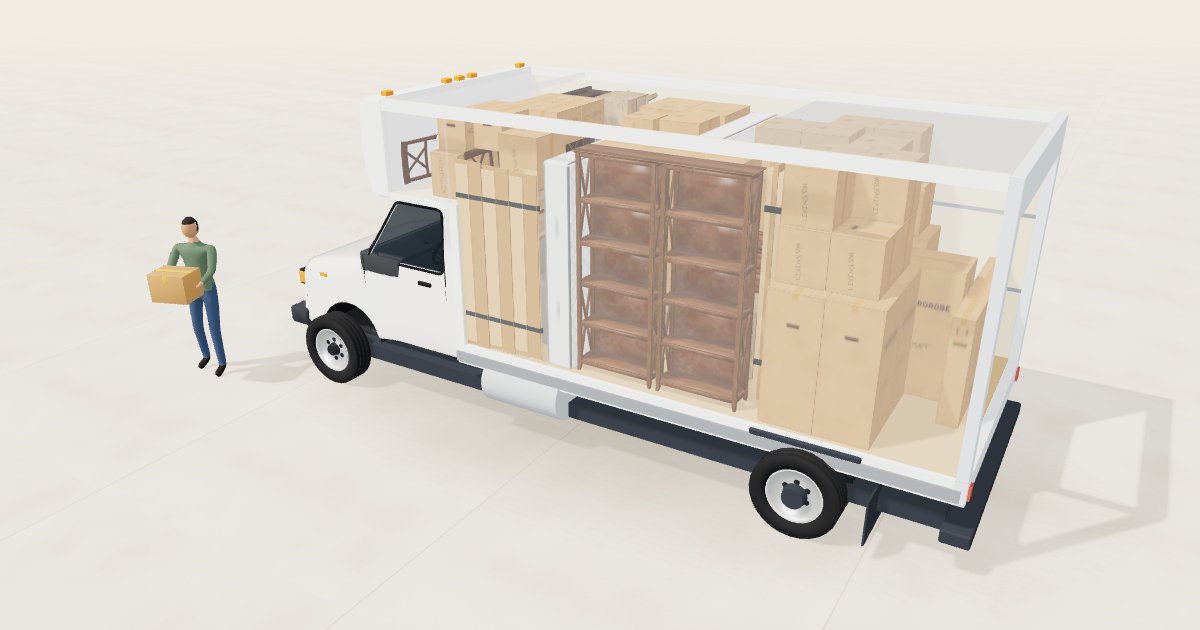
How to load a moving truck
Load in tiers from the cab to the door: heavy furniture and appliances first, mattresses on their edge along the walls, then boxes on top. And measure the door, not just the truck: on many trucks the door opening is lower than the inside, by up to 1'5" on the U‑Haul 26' Moving Truck.
1. Measure the big pieces and the door
The truck's length tells you how much fits; the door tells you whether your tallest pieces get in at all. A 5'10" fridge that must stay upright won't go through the 5'5" door of the Budget 12' Small Truck. Measure your fridge, armoire, sofa and any tall bookcase, then compare them with the door heights below.
| Vehicle | Door opening | Inside height |
|---|---|---|
| U‑Haul 4' x 8' Cargo Trailer | 3'1" wide × 3'5" high | 4'0" (7" more than the door) |
| U‑Haul 5' x 8' Cargo Trailer | 3'11" wide × 4'10" high | 5'0" |
| U‑Haul 9' Cargo Van | 5'1" wide × 4'1" high | 4'8" (7" more than the door) |
| U‑Haul 6' x 12' Cargo Trailer | 5'0" wide × 4'10" high | 5'3" (5" more than the door) |
| Budget 12' Small Truck | 5'11" wide × 5'5" high | 6'0" (7" more than the door) |
| U‑Haul 10' Moving Truck | 5'11" wide × 5'7" high | 6'1" (6" more than the door) |
| U‑Haul 15' Moving Truck | 7'3" wide × 6'5" high | 7'2" (9" more than the door) |
| U‑Haul 20' Moving Truck | 7'3" wide × 6'5" high | 7'1" (8" more than the door) |
| Budget 26' Large Truck | 7'10" wide × 7'7" high | 8'1" (6" more than the door) |
| U‑Haul 26' Moving Truck | 7'9" wide × 6'10" high | 8'3" (1'5" more than the door) |
| U‑Haul 29' Moving Truck | 7'9" wide × 7'4" high | 8'9" (1'5" more than the door) |
Sizes from each brand's own page.
2. Heavy things first, against the cab
Put the fridge, washer, dryer and the heaviest furniture against the front wall (the cab end), spread across the width. Heavy weight at the front, over the axles, keeps the truck stable. Keep the fridge upright.
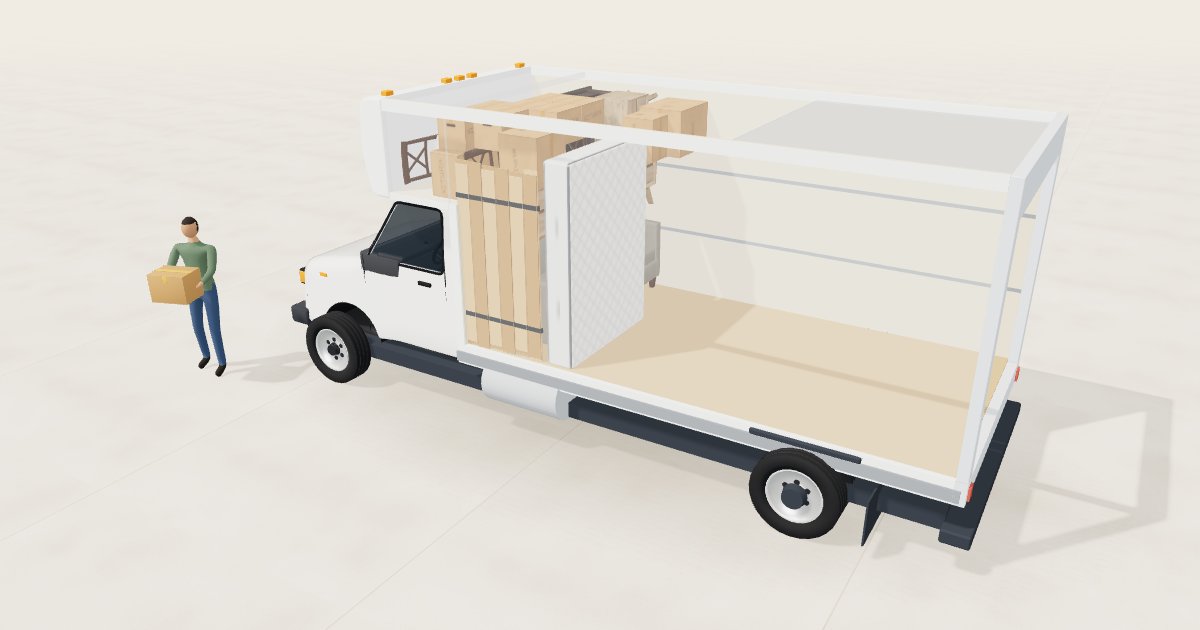
3. Mattresses on their edge, along the walls
Stand mattresses and box springs on their long edge against the side walls, in mattress bags. A king mattress is 6'4" wide, wider than many small trucks are tall: in a U‑Haul 10' Moving Truck (6'1" inside) it has to lean against the wall at an angle, and you should load it early, before other things take that floor.
4. Sofas on end, if it's tall enough
A sofa stood on its end takes far less floor than one sitting normally. A typical 3-seat sofa is about 7'3" long, so it stands on end only in trucks taller than that inside; otherwise load it sitting, against a wall, and use the space on top for light boxes and cushions.
5. Build tiers, floor to ceiling
Fill each section of the truck from the floor to the ceiling before moving toward the door: furniture at the bottom, boxes above, gaps filled with soft things. Tie each tier off to the rails on the walls so it can't shift.
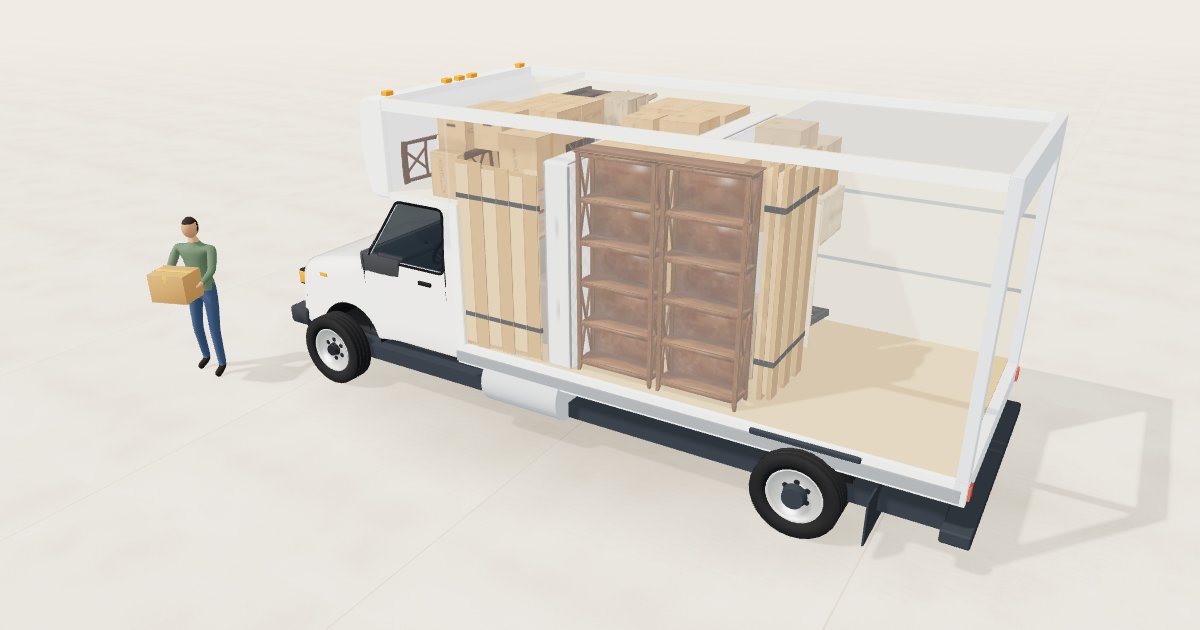
6. Boxes last, heavy ones at the bottom
Heavy boxes (books, kitchen) go low; light ones (linens, lamps) go on top or in the space over the cab. Nothing goes on top of mattresses or boxed TVs.